Europe Records a Surge in Rare Great Bustard Population Thanks to Conservation Efforts
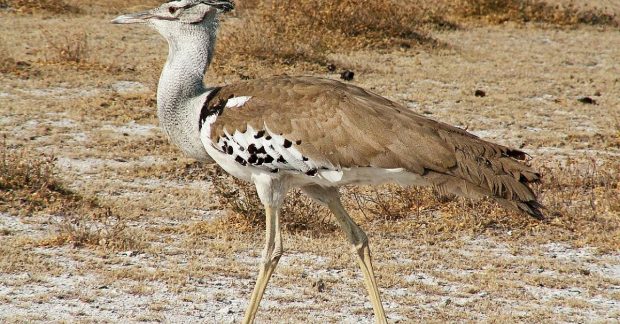
Ornithologists in Slovakia have counted 638 great bustards at a protected natural site, marking the best result in over fifty years.
 👥Society
Photo: UNIAN
Key points
- Slovakia recorded 638 great bustards, the highest count since 1973.
- Intensive farming and habitat loss previously drove the species to near extinction in the region.
- Restoration efforts launched in 2017 successfully transformed the area into a key wintering sanctuary.
The population of great bustards, among the heaviest flying birds in Europe, is showing a remarkable recovery. At the protected natural site of Sysľovské polia in Slovakia, experts recorded 638 individuals, the highest count since 1973 when 697 birds were registered. Just decades ago, human activity and the loss of natural habitats pushed this vulnerable species to the brink of local extinction.
History of Decline and Recovery
At the beginning of the twentieth century, approximately 2,400 great bustards lived in modern-day Slovakia. However, agricultural intensification, the destruction of meadows, and infrastructure development led to a catastrophic decline in their numbers. The situation was so severe that between 2006 and 2015, not a single pair nested in the area due to a complete lack of suitable conditions.
A turning point came in 2017 when conservationists and local farmers initiated habitat restoration projects. Specialists began replanting grass plots, restoring meadows, and establishing safe zones for nesting and foraging. Through systematic efforts, the border region spanning Slovakia, Austria, and Hungary has once again become a vital sanctuary, with the site now serving as a major wintering ground for the regional population.
Practical Significance and Future Challenges
Despite these encouraging conservation gains, ornithologists emphasize that ongoing habitat management and support for wildlife-friendly farming remain crucial. Great bustards are exceptionally sensitive to human disturbance due to their ground-nesting habits and timid nature. For urban and regional readers, such developments highlight the delicate balance required between human economic activity and the preservation of natural biodiversity.
Source UNIAN — unian.ua/curiosities/drohva-v-yevropi-chiselnist-odnogo-z-nayvazhch… ↗
Read next
 🛡️Security
Search and rescue continues in Dymer: death toll from Russian strike rises
Rescuers pulled a 79-year-old woman from the rubble and discovered another body. Search operations in the village are ongoing.
 🇺🇦Ukraine
Estonia affirms Ukraine's right to self-defense following Gulf of Finland incident
Estonian Foreign Minister Margus Tsahkna stated that the strike on a Russian vessel is a consequence of Russian aggression, affirming Ukraine's right to defend itself.
 🛡️Security
Rescue operation in Dymer: 89-year-old woman pulled from rubble
Search and rescue operations continue in the Kyiv region following a drone strike on a residential building.
 🛡️Security
Russian corvette 'Merkury' reportedly damaged in Libya by suspected Ukrainian drones
A Russian military vessel sustained damage in the port of Benghazi, with sources suggesting a potential attack by maritime drones.
 🛡️Security
Russia tests NATO defense mechanisms through airspace incidents in neighboring countries
Military experts suggest that violating the airspace of Alliance members is Moscow's attempt to identify vulnerabilities in NATO's security system.
 🧠AI Analysis
Waking up ancient bacteria: new study on permafrost thawing
Researchers from the University of Colorado have discovered that microorganisms trapped in permafrost for 40,000 years can become active again after thawing.