Scientists debunk 80-year-old myth about bat blindness and vision
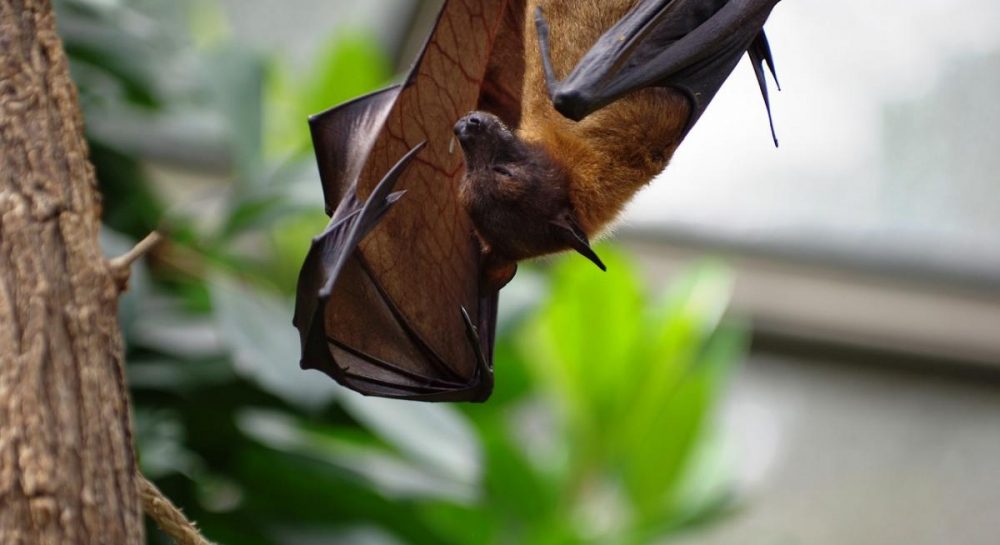
Researchers have discovered that bats are not blind and actively use their vision alongside echolocation while hunting and flying.
 ⚽Sport
Photo: UNIAN
Key points
- Eighty-year-old myth of bat blindness officially debunked
- Bats combine vision and echolocation during flight and hunting
- Ambient lighting significantly alters their flight speed and strategy
- Study conducted by Johns Hopkins and Aarhus University researchers
Modern scientific research continues to reshape long-standing perceptions of the animal kingdom. A recent study conducted by specialists from Johns Hopkins University and Aarhus University has officially debunked the widespread myth of bat blindness that persisted in the scientific community for over eighty years. As it turns out, these mammals not only possess functional vision but also skillfully combine it with their remarkable echolocation system to navigate their surroundings.
Visual adaptations and flight acrobatics
During the experiments, scientists tracked the eye movements of the animals in response to moving visual stimuli and head turns. The data proved that bats do track moving objects and possess specific ocular reflexes that help stabilize their vision during flight. Interestingly, when the researchers turned the bats' heads from side to side, their eyes remained almost motionless, differing significantly from other mammals. Scientists suggest this specialized visual system is tuned for performing complex aerial acrobatics.
Furthermore, data gathered from specialized sensors worn by the animals revealed that under brighter ambient lighting conditions, their hunting behavior shifts significantly. During dusk or daylight, bats reduce their reliance on echolocation, increase flight intensity, and catch prey much faster. Lead researcher Laura Stidsholt explained that bats reduce acoustic tracking when they receive sufficient sensory information through ambient light.
Implications for understanding wildlife
These biological findings offer a deeper insight into the complex physiology of chiropterans, which frequently inhabit areas close to human settlements and urban green spaces. Understanding how these creatures adapt to environmental conditions and utilize sensory inputs broadens our general knowledge of wildlife. It serves as a reminder of the intricate mechanisms that govern nature, fostering greater appreciation and scientific curiosity among the public.
Source UNIAN — unian.ua/curiosities/kazhani-dobre-bachat-i-vikoristovuyut-zir-pid-… ↗
Read next
 👥Society
How Much Water to Drink Daily for Healthy Blood Pressure: Cardiologists Explain
Leading cardiologists share the recommended daily water intake for men and women, explaining how both dehydration and overhydration affect blood pressure.
 👥Society
Construction of Underground Cancer Center in Kharkiv Slows Down Due to Funding Issues
The construction of a protected underground oncology department in Kharkiv is facing financial hurdles, which may impact project timelines.
 👥Society
Health benefits of chicory: Why you should add it to your diet
Experts highlight chicory as a valuable source of inulin, which supports gut health, digestion, and liver function.
 🚨Events
Protection against car thieves: why Kharkiv drivers are advised to use foil
Owners of cars with keyless entry systems are at risk of relay attacks. A simple way to secure your vehicle is to block the key signal using aluminum foil.
 👥Society
Tram Routes to Change Temporarily on Akademika Pavlova Street in Kharkiv
On November 23, tram traffic along Akademika Pavlova Street in Kharkiv will be restricted during daytime hours due to scheduled energy works. Routes No. 30, No. 6, and No…
 🚨Events
Doping Controversy in National Team: Team Doctor Responds to Mykhailo Mudryk's Allegations
The medical staff of the Ukraine national team has denied claims by Mykhailo Mudryk, a Kharkiv region native, regarding the potential ingestion of prohibited substances d…