Nuclear Fusion in Orbit: New Prospects for Space Energy
Researchers are exploring the possibility of placing fusion reactors in space to power future missions and settlements.
 💡Tech
Photo: RBC-Ukraine
Key points
- Orbital placement simplifies reactor cooling
- Microgravity reduces structural stress
- Fusion energy is safer than fission reactors
Space-based Tokamaks as an Energy Source
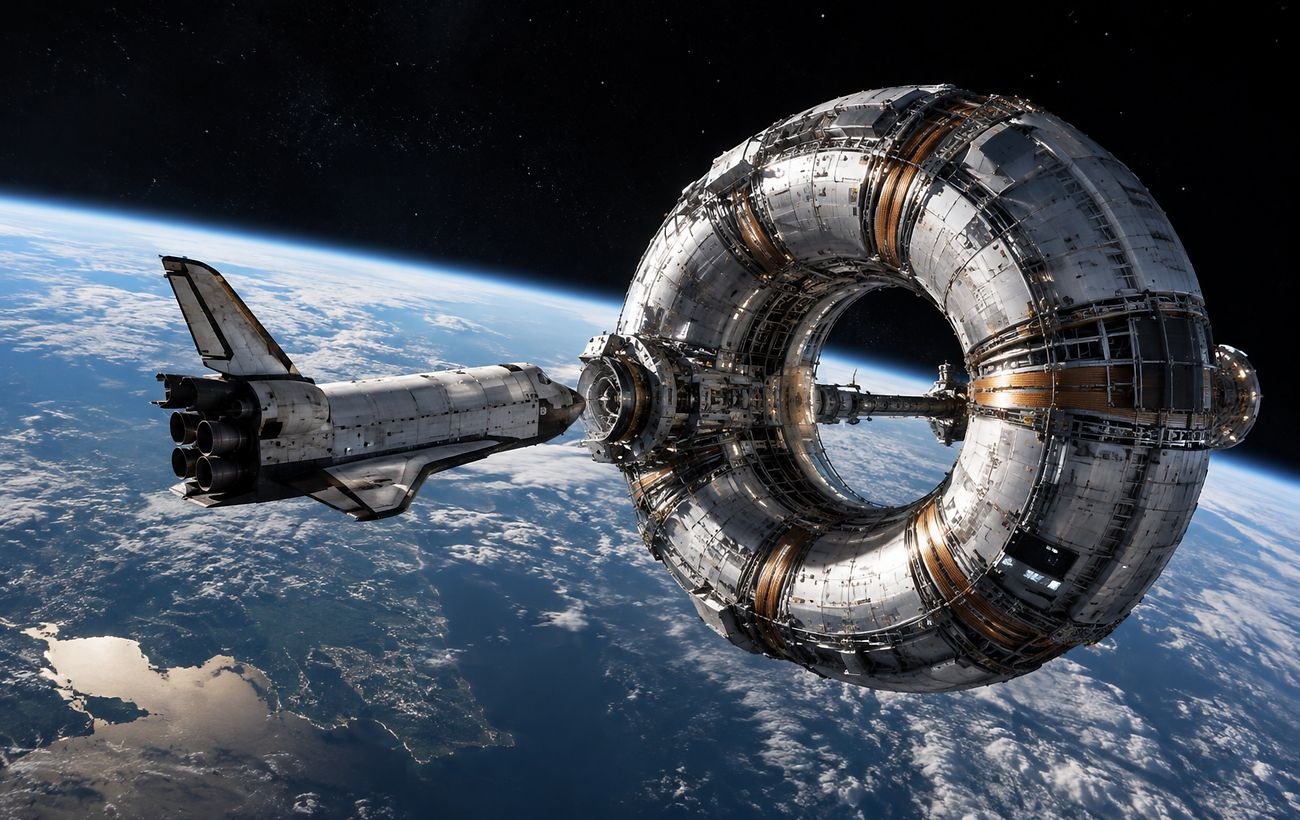
Scientists are studying the concept of moving nuclear fusion technology from Earth's surface to low Earth orbit. According to a study published in ResearchGate, placing reactors in outer space could solve the energy supply problem for long-range missions and future extraterrestrial colonies.
Physicist Yang Bae from the Spacefaring Research Institute highlights several key advantages of space for reactor operations. Specifically, microgravity significantly reduces mechanical stress on structures, and the absence of atmospheric pressure allows for smaller, lighter vacuum chambers. Furthermore, the vacuum of space simplifies cooling systems, as excess heat can be efficiently radiated into the environment.
Technical Solutions and Outlook
- Deployment of donut-shaped tokamaks in geostationary orbit.
- Use of laser systems to trigger reactions on specific targets.
- Development of 1 GW capacity units to power large-scale facilities.
While these projects are currently theoretical, they are viewed as a safer alternative to the fission reactors currently being developed by the US and China for lunar bases. Fusion energy could become a critical factor for long-term human presence beyond our planet.
Source RBC-Ukraine — rbc.ua/ukr/news/termoyaderni-reaktori-hochut-vidpraviti-kosmos-1795… ↗
Read next
 🚨Events
Ukrainian Defense Forces Conduct Special Operation Near Libya: Russian Corvette and Helicopter Destroyed
The Ukrainian military carried out a successful operation off the coast of Libya, destroying a Russian corvette, a Ka-27 helicopter, and damaging a cargo vessel.
 🛡️Security
Series of enemy strikes on Kharkiv region: eight injured, including three minors
As a result of evening and morning drone attacks on Kharkiv, Liubotyn, and Chuhuiv, eight people were injured, including three minors.
 🛡️Security
Western intelligence warns Russia is preparing to deploy nuclear weapons in space
Western intelligence agencies report that Russia could launch a satellite equipped with a nuclear warhead into orbit in the coming weeks. This escalation poses unpreceden…
 🛡️Security
Ukrainian Defense Forces improve positions in Kharkiv region: details of the advance
The Armed Forces of Ukraine have pushed back occupation troops in the Kupyansk direction, liberating over 55 square kilometers of territory.
 🛡️Security
Energy crisis in Kharkiv region: Power outages of up to 12 hours scheduled for November 23
On Monday, November 23, residents of the Kharkiv region will face prolonged power outages lasting up to 12 hours due to the aftermath of enemy attacks.
 🛡️Security
Jet-Powered Geran-5 Drones: Experts Assess the Threat of New UAV Modifications
Russian forces are employing upgraded jet-powered Geran-5 drones, which significantly outpace standard Shahed UAVs in speed and destructive power. Experts explained the d…